

What to do with anger
(TLDR: repackage it and turn it into action)

I never thought of myself as an angry person. I don’t recall being angry a lot growing up, or into adulthood, but it’s only recently, as I approach 40 and middle age, that I’ve acknowledged and accepted that I have anger. Lots and lots of deep, dark, ugly…rage.
I listened to a recent Mel Robbins segment that focused on grief, and the guest expert admitted that anger is usually an indication of pain—of grief due to loss. As I listened, something inside of me clicked. It suddenly made sense why I, over the last ten years, have had so much anger.
I’ve been grieving for a decade.
In my late 20s, while I wasn’t always “happy” with my life, I’d never had to grieve much. Everything was largely as it had been during my early life, and the future was only full of potential. Options. Plans. I was still a kid, being taken care of, free to dream and scheme and spend my money only on fun things like travel and clothes.
Then everything changed.
In late summer 2013, my parents told us over Sunday dinner that my mom had been diagnosed with pancreatic cancer. She’d been having some odd health problems like jaundice, which at the time didn’t alarm me.
I didn’t know then that she knew exactly what it meant—that her bile ducts were being pinched, causing the yellow skin tone, and that her fate was likely to be the same as her mother’s had been—to die relatively young from one of the least treatable, least survivable cancer varieties.
I remember feeling sad, crying some, but mostly feeling numb from that point forward.
Over the next year and a half, she’d undergo chemotherapy and radiation, cheerfully embracing the shit sandwich the universe had delivered to her. We didn’t talk much about the inevitable end. I don’t think anyone felt comfortable to name the thing—death.
I think we all felt like we had to be strong and reassuring to my mom, rather than let her know that her diagnosis was causing us pain and suffering too. We were all too stoic to fall apart.
All of a sudden, I was the friend in the group whose mom was sick. People tip-toed around the topic with me. I was pitied for something I hadn’t chosen for myself. And I was sad. And so few people simply asked me how I was doing.
I think people were scared to catch the sadness themselves.
From August 2013 to March 2015, post-diagnosis, pre-passage, I felt like I was living outside my body. I was on autopilot, and few things mattered like they’d mattered before. I felt alone and adrift, awaiting the inevitable, watching my mom shrink and shrivel.
There was one particular hospital stay of my mom’s (midway through the cancer journey) that I am so ashamed about in hindsight. I can’t remember what we were talking about, but seeing her laying in a hospital bed, under fluorescent lights, eating crappy food, being pumped full of chemicals, upset me so much that instead of staying with her there, and letting her see my sadness openly, I ran out and drove away. I left her there because the hell she was in was too much for me to be in too. I always felt like I abandoned her in her time of need, because I wasn’t strong enough to face it with her.
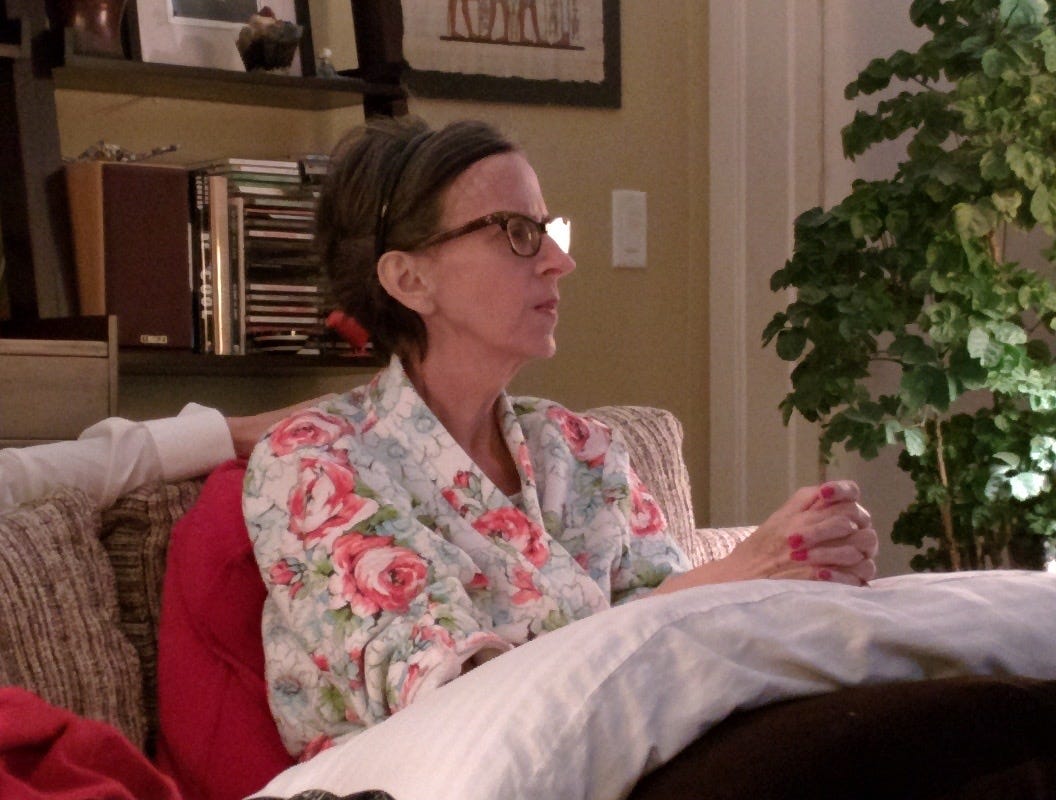
Months later, when my mom finally expired I was at work.
My dad called and only said: “Your mom has just passed. You should come see her.”
I hadn’t been sitting at her bedside night and day because she’d already left us. The drugs and cancer made her loopy and foggy, different from the mom I knew.
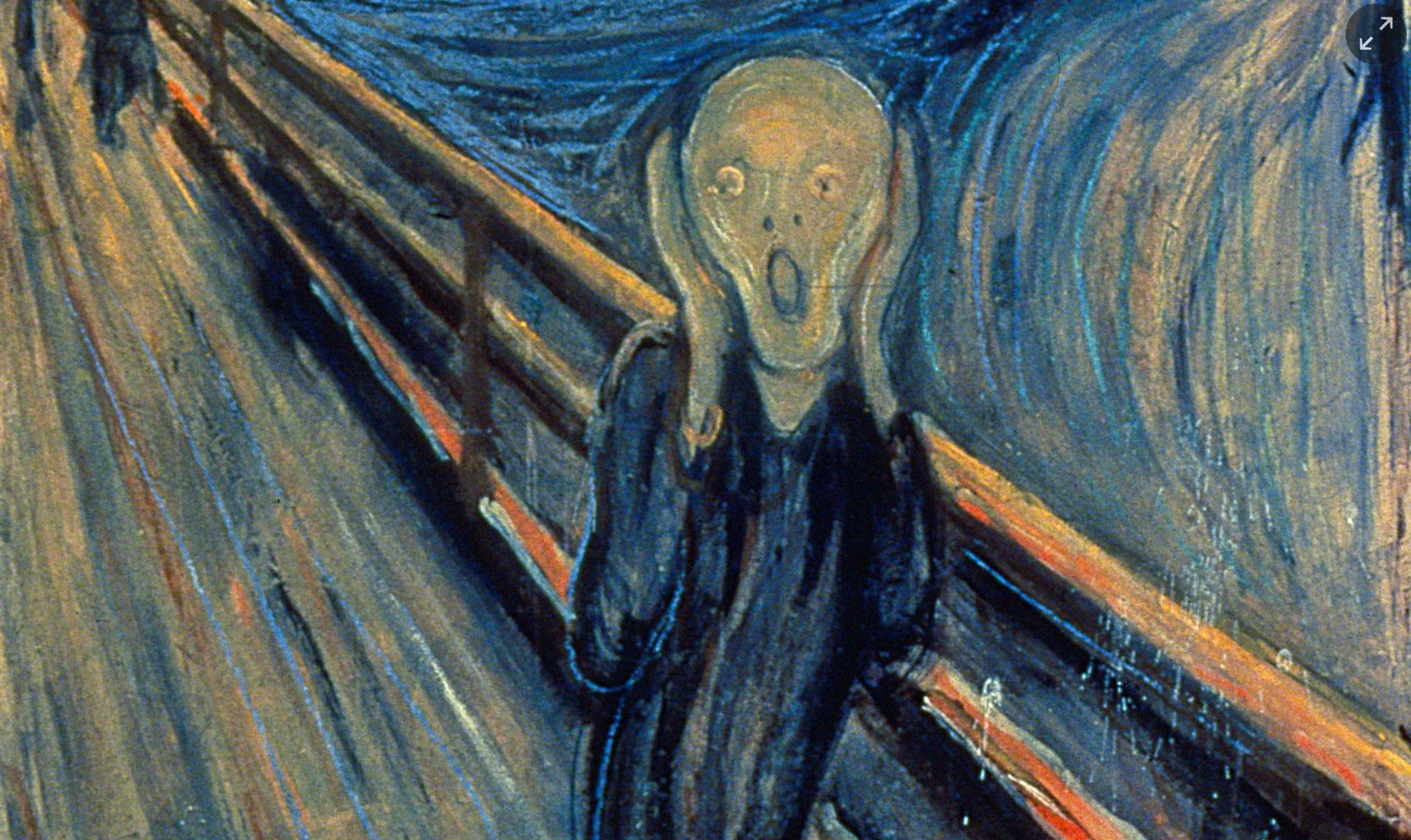
I raced home—why I was in a rush I’m not sure—and took some time to sit with her dead body. I asked a Hospice nurse to leave us. I didn’t know what to say or do. She looked so different from how I remembered her. Like Edvard Munch’s The Scream, her mouth hung open. Even in death, she was graceful and elegant, a bony beauty sucked of her marrow by a cruel genetic mutation she had no control over.
I wished for more time, to be able to pick her brain again, to ask about her life, to tell her how much she meant to me. It was too late—though I know she knew how much I adored her.
She’d always been my best friend and my biggest advocate. I outsourced a lot of my own self-confidence and self-esteem to her.
She kept tabs on my mental and physical health, and was always around to litigate the tough mental knots I found myself in. I trusted her judgement—she’d always guide me back to virtue, pragmatism, and love.
When I was a kid and found myself in anger and blame, she’d always suggest I put myself in the other person’s shoes, to be the bigger person who forgives. Or, to acknowledge my own poor behavior and to apologize first.
She never gave me carte blanche to be an entitled little prick, even if I got bullied at school or wanted to buy the thing to fit in. Victimhood was not her style—she’d been a renegade her whole life.
Losing her felt like losing the ship upon which I’d navigated the wide open sea up to that point. Suddenly I was thrust onto a flimsy raft with no motor, no sails, and no horizon. Just an endless sea of sloshing waves and dark stormclouds.
She was my anchor, and I’ve been adrift ever since.
It was hard to understand my own feelings at that time. I had a therapist, but I don’t think she was pushy enough to get me to open up fully. I hid behind humor, detachment, and the exciting prospect of change.
I hid the pain and anger behind a calm veneer. Salvation felt like surrounding myself with luxuries. Beautiful things that would make me forget how hurt I felt—which I did.
Shortly after her death, I began making the arrangements to go to business school to study fashion and retail—something I’d been curious about for years.
They say after loss, to not make any other major changes for at least a year. I made all the changes.
My instinct was to run far away from what I knew and the people I knew. I hated that I was the guy who’s mom had died. I desperately wanted her back, and if I couldn’t have her back, I planned to flush the life I’d built up to that point—in protest.
I felt I had nothing left worth sticking around for.
So I left.
Ten years later, I can only say that the journey has brought me full circle—right back to my pain and my starting point.
I left with determination and blind confidence—first to Italy, then to San Francisco, and finally to Los Angeles, where I lived until earlier this year.
I left thinking I’d find my true self far away from home, around different people and different circles. I desperately wanted to reinvent myself and be a new me who wasn’t sad, who was successful and stylish and could say “I’m better than all of you” back home.
I lived and breathed fashion. I threw myself into dreams of grandeur and career achievement. I weathered storms (like the COVID pandemic) out west, never quite sure where I really wanted to go professionally, but certain that I had to chase money and status.
And I got it, for a while.
I lived richly, but I was not prudent about building wealth or a solid career path.
I’d only just begun to make decent money, and I wasn’t about to save it. Little did I know that not having a sizable rainy day fund would come to be my biggest downfall—something, ironically, my mother would have insisted I do.
I lost my job mid-2024 due to layoffs, and at that time wasn’t especially alarmed.
In fact I was relieved, because I’d been unhappy more often than not in that job. I’d finally made my way into the fashion and luxury e-commerce world, but found it lacking a sense of cosmic importance.
I was given a decent severance, and had some money in the bank. But it didn’t last long in California, and I quickly shifted into panic mode.
As my life slowly began to collapse on itself—money got tighter, job hunting became harder as prospects were thin, and perhaps most damaging, my confidence waned—anger began to settle over me.
How could this happen?
Why me?
What cruel lesson am I being taught?
Haven’t I suffered enough?
Anger toward myself, about being so stubborn and entitled, I guess, but also anger toward others, anger toward my friends and family who weren’t suffering like I was suffering. Anger toward the endless rejection emails I would come to expect each morning.
I now see the error of my ways—the series of decisions I can only blame myself for, backed by poor judgement that finally caught up to me.
Ever since Delia Jane died, and my heart broke, all I have really wanted is the same kind of empowering, unconditional love and affection she gave to me.
But I’ve been afraid to let anyone in, to let anyone see the ugly rage and crushing pain and flimsy self assuredness that still lives in me. I’ve been afraid to cry openly, or to admit that I’ve felt lost for the last quarter of my life. Afraid to say that I still feel like I’m a scared ten year old, looking for his mom, not accepting that she’s never coming back.
Throughout the past decade, while I had enviable adventures, curated a chipper social media persona, met many wonderful friends, and charmed plenty of passing lovers, what I forgot was to tune into my heart.
My heart has been closed off and sealed for ten years, maybe more.
I let judgement of others, judgement of myself, fear of lack, and impostor syndrome creep in. I became envious, jealous, and impulsive.
Over time, I lost connection to my heart and my power, because it felt outside of me—lost with the loss of my mom.
Egotism finally caught up to me, because deep down I know that what I’ve been after for so many years isn’t what I really want, or need. Material abundance is a wonderful perk of a successful life and career, but it is not the goal.
Purpose is the goal. Service is the goal. Extending a hand to others is the goal.
Connection and community…is the goal.
Love, toward self and toward others, imperfect as they both can be, is the goal.
And if not now, when?
If not me, who?
What legacy do I want to leave?
These are the questions I now ask myself.
Money is a shallow end goal, though now I see that I need to respect and honor it in order to carry out my broader aspirations.
Doing something that matters, and helps others, is a much deeper, more fulfilling goal—even if it’s not as lucrative, not as sexy, and requires patience and discipline that’s mostly invisible.
I’ve learned now that “growing up” means cultivating an inner cheerleader—an inner anchor and inner compass. A strong inner optimist.
Because moms don’t last forever. I just happened to lose mine earlier than most.
This epic ten-year journey has shown me who I really want to be, hard as it has been to recognize and accept. I’m someone who respects himself, shows up authentically, and honors the clumsy, unglamorous nature of being a lifelong beginner.
Slowly now, my anger is turning to self love, acceptance, and forgiveness.
I approve of myself.
Louise Hay starts with that affirmation in 21 Days to Unlock the Power of Affirmations, which a wise friend recently gave to me to read.
I approve of myself for being numb, being hurt, running away, chasing pleasure, and perhaps most importantly: I approve of myself for falling hard on my face.
I’m still learning. And I’m still here.
I know now what to do with anger: repackage it into self-love.
And then turn it into action.
Turn it into plans.
Turn it into fuel for improvement, advancement, and authenticity.
Let it heal you, then let it go.
Wow, Alex. This is so vulnerable, beautiful, and deeply relatable. I hope the act of writing and sharing this was as powerful for you as reading it was for me. It opened something in me, allowing me to face some of the parts I usually try to hide.
It truly feels like you are letting us in and allowing real connection to your heart. You deserve love, acceptance, and forgiveness, always. Thank you for sharing this honest and powerful glimpse into your life. I wish I could have met your mom, but I feel like I’m getting to know her through you. Love you, my friend.
I’m so impressed with this. Grief is always interesting to me because it is underlying so many emotions. It can contort so much of our lives, you can think that you’ve dealt with it and then it takes you out by the knees. I have been impressed with you since you were a kids but one thing I know is you have no blame for your mom’s experience because you were there and you did 10X the caretaking that the next 100 people do in your situation. ❤️🌹☮️